
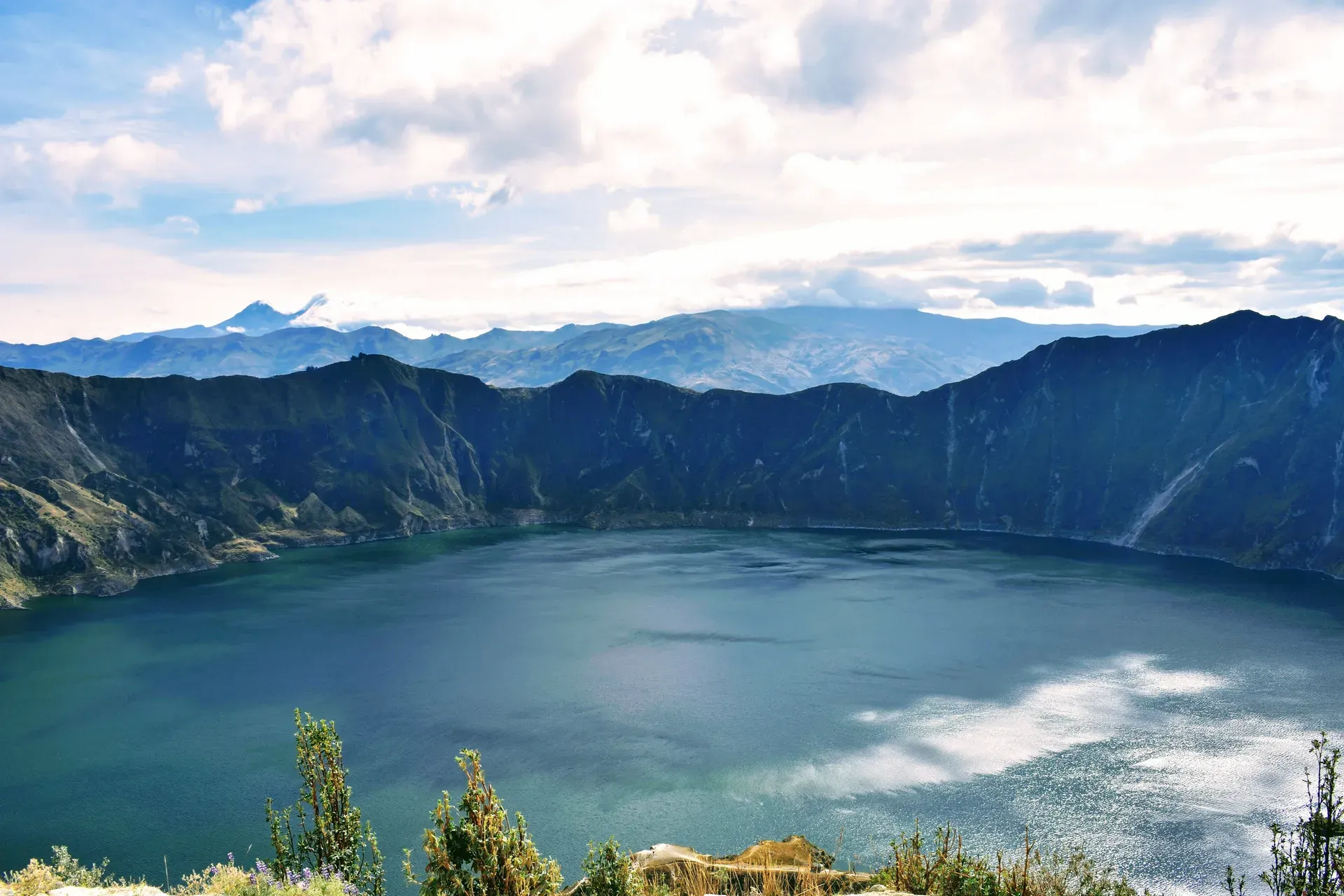
Admission to the crater is free, though the local community collects a $2.00 entry fee at the village gate. The reserve opens 365 days a year, accepting visitors between 8:00 a.m. and 4:00 p.m. before closing at 5:00 p.m.
Quilotoa Lagoon is open every day of the year. Visitors can enter the community and reserve areas starting at 8:00 a.m., with the final check-in permitted at 4:00 p.m. All hikers must clear the crater trails and check out by 5:00 p.m.
| Day | Hours | Note |
|---|---|---|
| Monday–Sunday | 08:00–17:00 | Last entry is at 16:00. Check-out is strictly at 17:00. |
The reserve and community remain open 365 days a year, with no closures for national or religious holidays. Visiting during Christmas, New Year, or major Ecuadorian public holidays guarantees crowded viewpoints and heavily booked accommodations. Book local lodging well in advance if traveling during these peak periods.
Admission to the Quilotoa crater and lagoon is free. The local indigenous community charges a mandatory $2.00 entry fee to access the village, which covers parking and restroom use. Bring physical cash in small denominations, as the nearest ATM is 63 kilometers away in Latacunga.
| Category | Price | Note |
|---|---|---|
| Adult Community Entry | $2.00 | Includes village access, parking, and restrooms |
| Child Community Entry | $1.00 | Mandatory fee for village access |
| Senior Community Entry | $1.00 | Mandatory fee for village access |
| Lagoon & Crater Access | Free | Registration required upon entering the Ilinizas Ecological Reserve |
| Vehicle Entry | $2.00 | Applies to visitors entering the village with a car |
| Mule Rental (Return Climb) | ~$10.00 | Optional ride from the lake shore back to the crater rim |
Access to the crater and lagoon is always free, though the community village entry fee applies every day of the year.
Planning your visit to Quilotoa Lagoon? Find tours with free cancellation and skip-the-line options.
View All ToursJune through September offers the clearest skies and driest trail conditions for descending the crater. A brief dry window also occurs in December and early January, though visiting during Christmas or New Year guarantees heavily booked accommodations and crowded viewpoints. Wet-season months bring muddy paths and thick cloud cover that obscures the lake.
| Period | Crowd Level | Recommendation |
|---|---|---|
| Early morning (08:00–10:00) | Low | Start the 1.4-kilometer descent now to secure clear views before afternoon clouds roll in. |
| Midday (10:00–13:00) | High | The sun sits directly overhead, illuminating the lake's turquoise and emerald colors for peak photography. |
| Early afternoon (13:00–15:00) | Moderate | Cloud cover frequently moves in during these hours, rapidly dropping temperatures at the 3,914-meter rim. |
| Late afternoon (15:00–17:00) | Low | Check-in closes at 16:00, leaving just enough time for a quick look from the Shalalá Viewpoint before the mandatory 17:00 exit. |
A standard visit descending to the crater floor and returning takes about three hours. Total time shifts depending on whether you tackle the full rim trail or stick to the paved lookout points near the village. The 3,914-meter elevation often triggers rapid physical exhaustion, forcing hikers to double their estimated time for the steep 1.4-kilometer return climb.
Pay the $2.00 community entry fee in physical cash, as local shops and hostels do not accept credit cards. Withdraw your money at an ATM in Latacunga before traveling. Quilotoa village has no cash machines.
Start your descent down the 1.4-kilometer trail before midday to secure clear views of the turquoise water. Heavy cloud cover frequently rolls in during the afternoon, obscuring the crater. Avoid major Ecuadorian holidays like Christmas to bypass heavily booked accommodations and crowded viewpoints.
Spend a few days in Quito or Latacunga before attempting the hike. Physical exertion at 3,914 meters above sea level quickly triggers severe altitude sickness. Carry altitude medication and hire a local mule for $10 to handle the steep 45-to-90-minute climb back up to the rim.
Wear a windproof coat, gloves, and a wool hat to block the freezing winds at the crater rim. Temperatures drop rapidly, especially during cold Andean nights. Lace up sturdy hiking boots with heavy traction to navigate the slippery, sandy volcanic soil on the descent.
Capture the entire three-kilometer-wide caldera using a wide-angle camera lens. Standard frames fail to fit the massive scale of the lake from the viewpoints. Leave your drones and tripods behind, as park rules strictly prohibit them inside the Ilinizas Ecological Reserve.
Admission to the crater and lagoon is free. The local indigenous community charges a mandatory $2.00 village entry fee per adult and $1.00 for children or seniors. This payment covers access to the parking lot and public restrooms.
The Quilotoa Community and reserve areas operate 365 days a year with check-in from 8:00 a.m. to 4:00 p.m. All visitors must check out by 5:00 p.m. Arrive early in the morning to beat the afternoon clouds that frequently obscure the 3-kilometer-wide caldera.
Prior authorization is not required to visit the lagoon. You simply register upon arrival at the Ilinizas Ecological Reserve entry points, such as Quilotoa Beach. Pay the $2.00 community fee at the gate using exact change.
Bring physical cash in small denominations because credit and debit cards are rarely accepted. The village has no ATMs. Withdraw enough money in Latacunga before making the 77-kilometer journey to the crater.
A standard round-trip descent to the shoreline takes about 3 hours. Hiking the full 10-kilometer circumference of the crater rim demands 4 to 6 hours. The 1.4-kilometer sandy trail down to the water takes 30 to 45 minutes, while the high-altitude return climb requires up to 90 minutes.
Local guides charge approximately $10 to lead a mule up the steep crater trail. You can hire them directly at the lake shore if the 3,914-meter altitude makes the return climb too strenuous. The ride bypasses a grueling 90-minute uphill trek through sandy volcanic soil.
The protected area strictly prohibits the use of drones and tripods. You can bring a standard camera to capture the turquoise water, but you need a wide-angle lens to fit the massive 3-kilometer caldera into a single frame.
Browse verified tours with free cancellation and instant confirmation.
Find Tours