
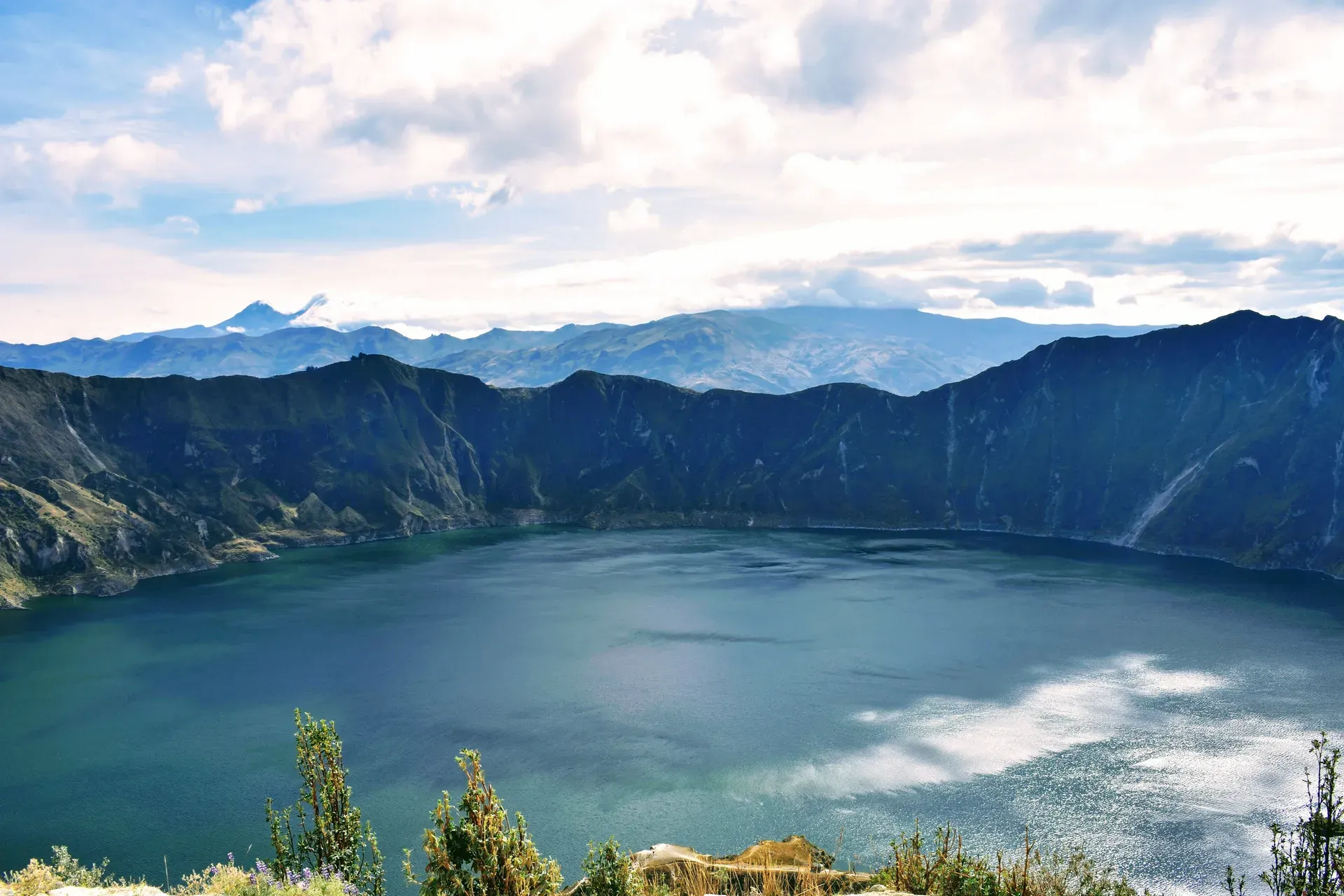
Most visitors reach the high-altitude Pujilí Canton by taking a two-hour public bus from the Latacunga Terminal directly to the crater. Private transfers from Quito cover the 178-kilometer route in three hours for those seeking a direct drive.
Quilotoa, Pujilí Canton, Cotopaxi Province, Ecuador
Buses leave Latacunga Terminal directly for the Quilotoa hamlet, traveling 77 kilometers along an asphalted road. The two-hour route covers 63 kilometers to Zumbahua before navigating the final 14-kilometer stretch up to the crater. Riders step off right at the community entrance, where local indigenous residents collect a $2.00 entry fee. Morning departures run at 06:00, 07:30, 08:00, 10:00, and 11:00. Missing the 17:00 return bus leaves you stranded in the village overnight. Bring exact change, as drivers rarely break large bills.
Passengers board a southbound bus at Quitumbe Terminal for the 1.5-hour ride to Latacunga. This initial leg costs $2.50. At the Latacunga station, riders must switch to a local bus bound for Quilotoa or Zumbahua. The second leg adds two hours and $2.00 to the trip. The total distance covers 178 kilometers across the high-altitude Andean landscape. Missing the direct transfer means waiting for the next scheduled departure, extending the three-and-a-half-hour travel time. Keep small bills handy, because ATMs do not exist past Latacunga.
Private drivers pick passengers up directly from their hotel in Quito and drive straight to the crater rim. The 178-kilometer trip skips the bus terminals entirely, cutting transit time down to exactly three hours. Accommodations along the Quilotoa Loop coordinate this service upon request. Vehicles hold up to four passengers, dividing the $100 flat rate into a manageable cost for groups. You arrive at the 3,914-meter elevation without hauling luggage between stations. Request an early departure to secure the clearest views before afternoon clouds obscure the lake.
Motorists head south from Quito on the South Pan-American Highway before turning onto the Pujilí-La Maná road. The 178-kilometer drive takes a little over three hours. The route climbs steadily into the mountains, ending directly at the village gates. Guards at the Quilotoa Community entrance collect a $2.00 fee per car. This payment grants access to the village parking lots and public restrooms. Fill your gas tank in Latacunga before tackling the final mountain ascent, as services disappear completely near the summit.
Hikers reach the lagoon on foot by completing the multi-day Quilotoa Loop. The trail winds through remote farming communities, with popular overnight stops in the mountain towns of Isinlivi and Chugchilán. Trekking the full route takes two to four days, ending with a steep ascent to the crater rim. Navigating the unpaved paths requires sturdy hiking boots with heavy traction. The physical exertion triggers severe altitude sickness if your body remains unprepared. Acclimatize in Quito or Latacunga for a few days before starting the trek.
Parking is located inside the Quilotoa Community village and is included in the $2.00 per person entry fee. Entering the gates with a car costs an additional $2.00. The flat parking area provides direct wheelchair access to the main paved lookout points on the crater rim.
| From | Mode | Time | Cost | Tip |
|---|---|---|---|---|
| Quito (Quitumbe Terminal) | Bus | 03:30 | $4.50 USD | Ride the public bus to Latacunga for $2.50, then transfer to a second bus bound for Quilotoa or Zumbahua. |
| Quito | Private Transfer | 03:00 | $100.00 USD | Split the flat rate among up to four passengers by booking directly through your Quilotoa Loop accommodation. |
| Latacunga Terminal | Bus | 02:00 | $2.00 USD | Morning buses depart at 06:00, 07:30, 08:00, 10:00, and 11:00. Catch the final return bus out of the hamlet at 17:00. |
Spend a few days in Quito or Latacunga before attempting the descent. The crater rim sits at 3,914 meters above sea level, where sudden physical exertion triggers severe altitude sickness. Carry altitude medication to mitigate the risk during your visit.
Withdraw all necessary funds in Latacunga before traveling to the crater. Quilotoa village lacks ATMs, and local vendors do not accept credit cards for the $2 community entry fee, food, or handicraft purchases. Carry small bills to pay for the $10 mule rentals at the lake shore.
Begin your hike down before midday to secure the clearest views of the turquoise water. Heavy cloud cover frequently rolls in during the afternoon, completely obscuring the three-kilometer-wide caldera. Sunlight directly overhead highlights the shifting emerald colors best.
Navigate the steep, slippery volcanic sand on the 1.4-kilometer trail using sturdy hiking boots. Temperatures drop rapidly at the rim, exposing hikers to freezing winds and hypothermia risks. Pack a windproof coat, gloves, and a wool hat to handle the rapid weather shifts.
Pay $10 at the bottom of the caldera to ride a mule back up the crater wall. The return hike requires 45 to 90 minutes of grueling uphill walking through loose soil at high elevation. This alternative prevents severe physical exhaustion on the steep slopes.
Take a $2.50 public bus from Quitumbe Terminal in south Quito to Latacunga, which takes 1.5 hours. Transfer at Latacunga to a second bus heading to Quilotoa or Zumbahua for another $2.00. The entire 178-kilometer trip takes about three and a half hours.
Morning buses depart Latacunga Terminal for the Quilotoa hamlet at 06:00, 07:30, 08:00, 10:00, and 11:00. The two-hour ride covers 63 kilometers to Zumbahua plus a 14-kilometer stretch on an asphalted road directly to the crater. Catch the final return bus from Quilotoa at 17:00 before transport shuts down for the evening.
Expect to pay $100.00 USD for a direct vehicle from Quito to the crater rim. This three-hour ride accommodates up to four passengers and covers 178 kilometers. Accommodations along the Quilotoa Loop can coordinate this service directly for you.
Entering the crater and lagoon is free, but the Quilotoa Community charges a mandatory $2.00 fee per person to access the village. Bringing a car inside costs an additional $2.00. This entry ticket covers parking spaces and access to the public restrooms.
The community and reserve areas operate 365 days a year with check-in hours running from 8:00 a.m. to 4:00 p.m. All visitors must check out by 5:00 p.m. Registration is required upon entering the Ilinizas Ecological Reserve zones, though no prior permits are necessary.
Quilotoa village has no ATMs, and local businesses rarely accept credit or debit cards. Withdraw all necessary cash in Latacunga before boarding your bus or driving up the mountain. Bring small denominations to pay for the $2.00 community fee, meals, and the $10 mule rentals at the lake.
Vehicles can only reach the village parking area at the crater rim, sitting at 3,914 meters above sea level. Reaching the water requires hiking down a steep, sandy 1.4-kilometer trail that drops 364 meters in elevation. Wheelchair users can access the main viewing point at the rim, but the descent path is entirely inaccessible.
Browse verified tours with free cancellation and instant confirmation.
Find Tours